Technology has transformed the way people live, work, and communicate. One of the most important technological developments in recent years is the growth of smart devices and the Internet of Things (IoT). These innovations are making everyday life more connected, efficient, and convenient. From smart homes to wearable devices, the Internet of Things is becoming an essential part of modern lifestyles.
The rise of smart devices and IoT in daily life is changing how people interact with technology. Devices such as smart speakers, smart thermostats, smartwatches, and connected appliances are now commonly used in homes and workplaces. These technologies collect and share data through the internet, allowing devices to communicate with each other and automate various tasks. As a result, IoT technology is improving productivity, comfort, and overall quality of life.
Understanding Smart Devices and the Internet of Things
Smart devices are electronic gadgets that connect to the internet and can communicate with other devices. The Internet of Things (IoT) refers to a network of interconnected devices that exchange information through the internet. These devices use sensors, software, and connectivity to collect data and perform automated functions.
In daily life, smart devices are used to simplify tasks and improve efficiency. For example, smart home systems can automatically adjust lighting, temperature, and security settings. This technology allows users to control devices remotely using smartphones or voice assistants.
Examples of smart devices include:
-
Smart speakers and voice assistants
-
Smart home security systems
-
Smart TVs and entertainment devices
-
Wearable devices such as fitness trackers
These devices work together through IoT networks to create a more connected environment.
How IoT Technology Works
The Internet of Things operates through a combination of sensors, internet connectivity, and data processing systems. Smart devices collect information from their surroundings and send it to cloud platforms where the data is analyzed. Based on this analysis, devices can automatically perform actions or provide useful insights to users.
For example, a smart thermostat can monitor temperature changes in a home and adjust the heating or cooling system automatically. This process improves energy efficiency and reduces electricity costs.
Key components of IoT technology include:
-
Sensors that collect real-time data
-
Internet connectivity for device communication
-
Cloud platforms for data storage and analysis
-
Software applications that control smart devices
These components work together to create intelligent and responsive systems.
Smart Homes: Transforming Everyday Living
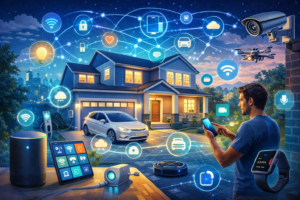
Smart homes are one of the most popular applications of IoT technology. A smart home uses connected devices to automate household functions such as lighting, security, temperature control, and entertainment. These systems can be controlled using smartphones or voice commands.
Smart home technology provides greater convenience and improves home management. For example, homeowners can monitor security cameras, control lighting, or lock doors remotely. This level of control helps improve safety and energy efficiency.
Common smart home devices include:
-
Smart lighting systems
-
Smart thermostats
-
Smart door locks and security cameras
-
Smart kitchen appliances
The growth of smart homes shows how IoT technology is becoming an important part of modern living.
Wearable Smart Devices and Personal Health
Wearable smart devices are another major innovation in IoT technology. Devices such as smartwatches and fitness trackers help individuals monitor their health and fitness activities. These devices collect data related to physical activity, heart rate, sleep patterns, and overall wellness.
By analyzing this data, users can make better lifestyle decisions and improve their health. Wearable devices also provide reminders for exercise, hydration, and sleep, helping people maintain healthy routines.
Popular wearable smart devices include:
-
Smartwatches with health monitoring features
-
Fitness trackers for physical activity
-
Smart glasses and health sensors
-
Wearable medical monitoring devices
These technologies are making healthcare more proactive and personalized.
The Role of IoT in Smart Cities
IoT technology is also playing a significant role in the development of smart cities. Governments and urban planners are using connected systems to improve transportation, energy management, and public safety.
For example, smart traffic management systems can monitor road conditions and adjust traffic signals to reduce congestion. Smart energy grids help manage electricity distribution more efficiently, reducing waste and improving sustainability.
Examples of IoT applications in smart cities include:
-
Smart traffic control systems
-
Intelligent waste management systems
-
Smart street lighting
-
Environmental monitoring systems
These solutions help create safer and more efficient urban environments.
Benefits of Smart Devices and IoT in Daily Life
The growing use of smart devices and IoT technology provides many advantages for individuals and businesses. These technologies make everyday activities easier and improve efficiency in various areas of life.
Smart devices automate routine tasks, allowing people to save time and energy. They also provide real-time information that helps users make better decisions. Additionally, IoT technology improves resource management and energy efficiency.
Major benefits of IoT technology include:
-
Increased convenience and automation
-
Improved energy efficiency
-
Better data-driven decision making
-
Enhanced security and safety systems
These benefits demonstrate why IoT adoption continues to grow worldwide.
Challenges and Security Concerns
Despite its many advantages, the rise of IoT technology also presents several challenges. One of the main concerns is data security and privacy. Since smart devices collect and share large amounts of information, protecting this data is extremely important.
Cybersecurity threats such as hacking and unauthorized access can affect IoT systems. Manufacturers and technology companies are working to develop stronger security measures to protect user data.
Common challenges of IoT technology include:
-
Data privacy concerns
-
Cybersecurity risks
-
Compatibility issues between devices
-
High setup costs for advanced systems
Addressing these challenges is necessary to ensure safe and reliable IoT adoption.
The Future of Smart Devices and IoT
The future of smart devices and the Internet of Things looks very promising. As technology continues to evolve, more devices will become connected to the internet. Artificial intelligence and machine learning will also enhance IoT systems, making them more intelligent and efficient.
In the coming years, IoT technology is expected to expand into new areas such as healthcare, transportation, agriculture, and industrial automation. Smart devices will continue to improve convenience and productivity in everyday life.
Future trends in IoT technology include:
-
AI-powered smart devices
-
Advanced smart home automation
-
IoT solutions for healthcare and agriculture
-
Greater integration between devices and digital platforms
These developments will further strengthen the role of IoT in modern society.
Conclusion
The rise of smart devices and the Internet of Things in daily life is transforming how people interact with technology. From smart homes to wearable health devices, IoT systems are making life more convenient, efficient, and connected.
As more devices become part of the IoT ecosystem, individuals and businesses will benefit from improved automation and data-driven insights. Although challenges such as security and privacy remain, continuous technological advancements will help address these concerns. The future of IoT promises a smarter, more connected world where technology seamlessly integrates into everyday life.
Read more : zxdyenergy.com